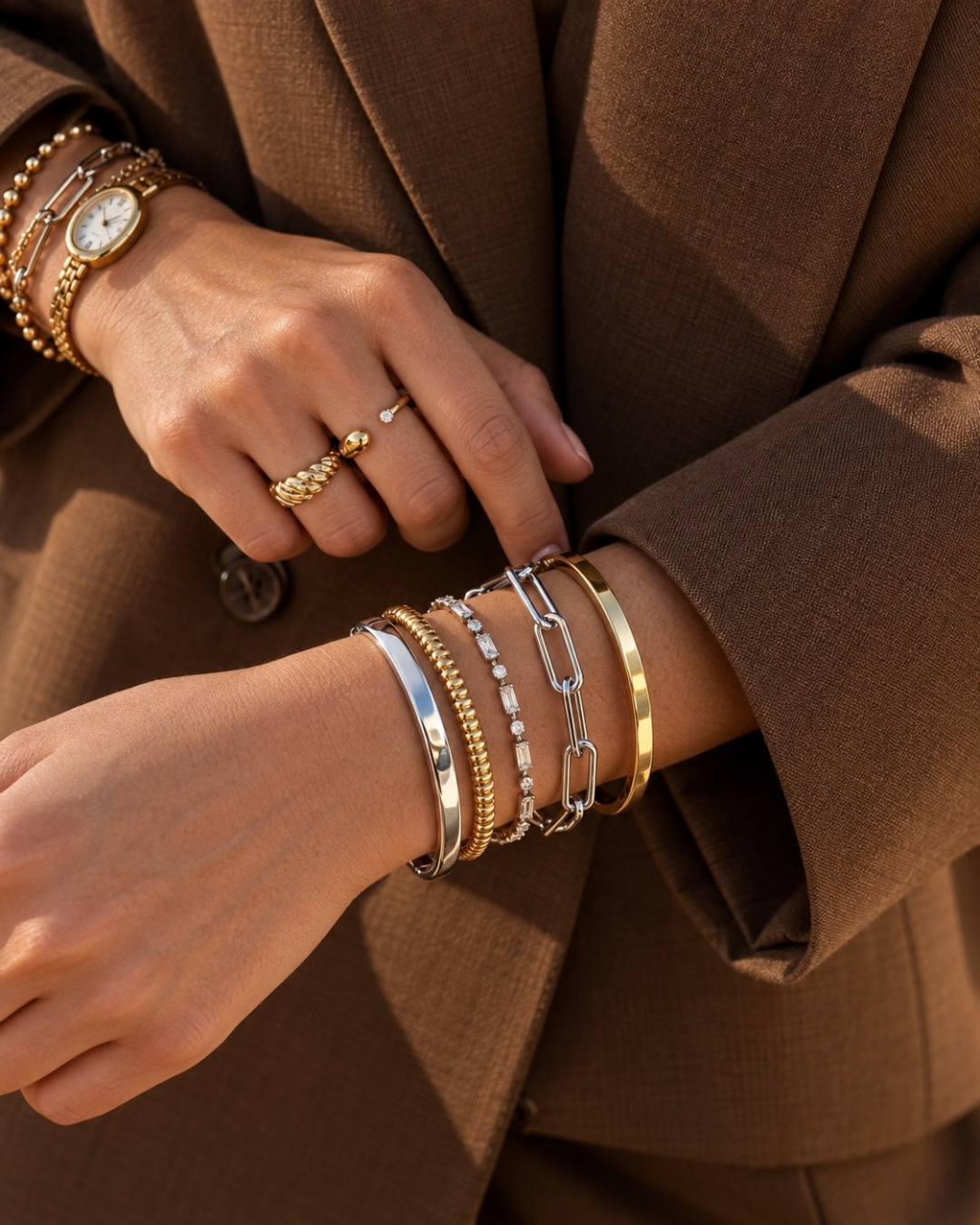
316L Stainless Steel in Jewellery: Benefits & Care
316L stainless steel is widely used for modern jewellery because it is robust, dimensionally stable and easy to care for. It is particularly suited to designs worn regularly that should retain a clean, precise surface.
What does 316L stainless steel mean?
316L refers to a specific stainless-steel alloy. The “L” indicates a low carbon content. In jewellery, the material is valued for its corrosion resistance, stability and smooth surface.
What are the benefits of 316L stainless steel in jewellery?
- Robust: Stainless steel withstands many forms of everyday wear.
- Dimensionally stable: It works well for clean bangles, chains and structured designs.
- Easy to care for: A soft cloth is usually enough for everyday cleaning.
- Good base for finishes: Stainless steel can be coated in gold or silver tones.
Can 316L stainless steel be gold-plated?
Yes. A stainless-steel base can be finished with a gold-tone surface. AVERELLE uses different finishing methods depending on the model. The binding details are always listed on the respective product page.
Read more about coatings in our article What is PVD gold plating?.
How do you care for stainless-steel jewellery?
Wipe jewellery with a soft, dry cloth after wearing and store pieces separately where possible. Avoid aggressive cleaners and strongly abrasive materials. With coated surfaces, careful handling also helps protect the finish.
Is stainless-steel jewellery water-resistant?
The water resistance of a finished piece depends not only on the base material, but also on coatings, stones, adhesives and construction. Always follow the information for the specific model. Find a relevant selection under Water-Resistant Jewellery for Women.
Which types of jewellery are made from stainless steel?
316L stainless steel is suitable for many jewellery types: necklaces, bangles, bracelets and pendants. At AVERELLE, steel forms the base of many gold and silver designs. Discover our necklaces, bangles and bracelets.